Similar to identity theft, this type of fraud happens when an unauthorized individual gain access through online banking applications, capturing the account information to create and write bad checks.
Account-centric enterprise content management solutions allow users to access account holder information based on their account numbers.
ACH (Automated Clearing House) is an electronic payment network that enables banks, credit unions, businesses, and consumers to securely send and receive funds between accounts for transactions such as direct deposit, bill payments, recurring payments, and account transfers.
An adverse action notice is a document sent to a loan applicant stating a bank’s rationale for denying a loan. It may also contain a counteroffer, such as a lesser amount or a request for an approved co-borrower.
Agentic AI refers to artificial intelligence systems that can autonomously plan, reason, make decisions, and take action to achieve specific goals with limited human intervention.
The term “aging exceptions” refers to a group of critical exceptions that have not been resolved within a reasonable amount of time.
Altered check fraud occurs when a fraudster changes the amounts and Payee from a stolen check.
API is short for “application programming interface.” Technology companies like Alogent rely on APIs to connect multiple software applications, thereby enabling a two-way exchange of information to support users’ needs.
Audit and exam prep is a process that financial institutions go through in order to adequately prepare for upcoming audits and exams.
An authorized signer form is a document that allows an account holder to grant a range of clearance levels to individuals to perform certain functions within a bank account.

What is a Credit File?

Unlike consumers, businesses do not typically have an easily accessible credit score. For financial institutions, this means that creditworthiness must be established through careful analysis of borrower information. Banks and credit unions also regularly collect updated borrower documentation to ensure assumptions have not substantially changed. Borrower-related credit information is stored in what’s known as a “credit file.”

Credit File vs. Loan File

Bankers sometimes use “credit file” interchangeably with “loan file.” That’s because traditional paper loan files often contain sections for borrower information. This perspective works fine when a one-to-one relationship exists between borrowers and loans. In reality, however, commercial borrowers’ needs are complex and may involve multiple loans. A high-growth construction company, for example, might require several loans for equipment, vehicles, and property. Replicating the company’s credit information across several loan files makes it difficult to maintain a complete understanding of the relationship. This approach also leads to unnecessary friction with borrowers, due to overlapping documentation requests.

For these reasons, credit and loan files should be viewed as related—but distinctly different.

Maintaining a Master Credit File

Organizing each commercial borrower’s information into a “master credit file” presents multiple opportunities for financial institutions. Potential benefits include:

  • Credit documents become easier for staff to locate
  • Identifying credit exceptions requires fewer steps
  • Credit analysts and underwriters can get to work faster
  • Borrowers should receive fewer documentation requests

Despite the many benefits, adopting a master credit file strategy necessitates change. Some lenders and staff may feel unmotivated to adjust their existing workflows. Presenting a clear value proposition and adopting the right technology are key steps for driving organizational change.

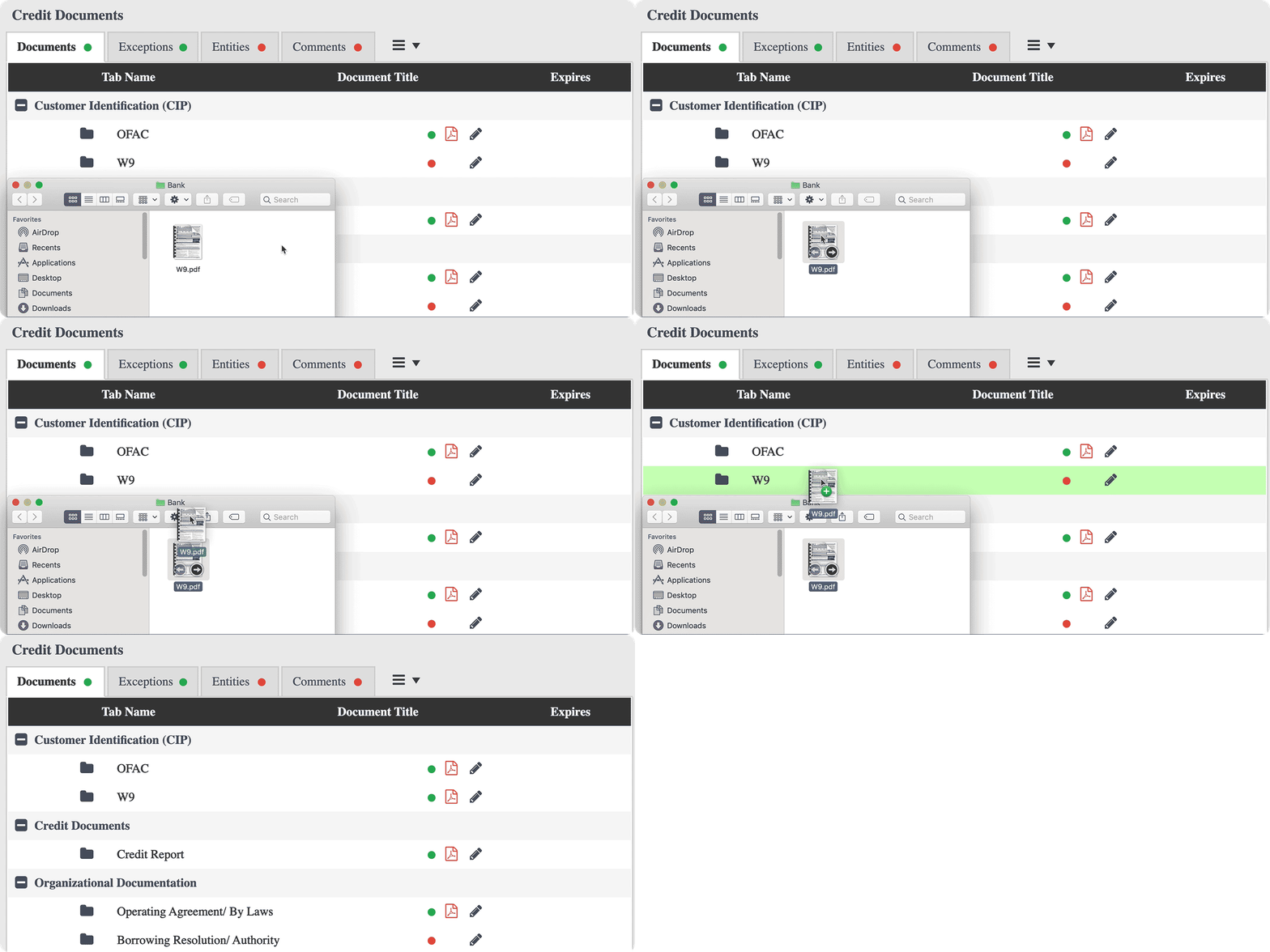
Alogent’s AccuAccount software was designed to support the unique needs of commercial credit and loans. The “customer view” screen in AccuAccount organizes credit and loan information in a familiar way. Red and green indicators make it easy to spot missing documents. Resolving a credit exception is as easy as dragging and dropping into AccuAccount.
Learn about AccuAccount or read more banking definitions.
 

Explore more resources

Related articles

Monday 2 November 2026

Bank and Credit Union Mergers: A Strategic Opportunity for Deposit Modernization

When banks and credit unions merge, technology discussions often focus on integration. Which systems will be retained? How will operations be unified? What will the…

Read the Blog

Tuesday 27 October 2026

Why HR Teams Need FASTdocs

Human resource departments at financial institutions face considerable pressure when it comes to information management. Applicant resumes, employee benefit election forms, and tax withholding certificates…

Read the Blog

Monday 19 October 2026

Strengthening Your Financial Institution through a “Connected” Approach to Exceptions

Banking exceptions come in a variety of shapes and sizes—and from a variety of departments. Commercial lending is often a major source of exceptions, but…

Read the Blog

Tuesday 13 October 2026

3 Real-World Use Cases of FASTdocs for Consumer Lending Teams

One lender might interact with hundreds of borrowers over the course of a single year. Each relationship involves a variety of conversations, emails, and documents…

Read the Blog

Tuesday 6 October 2026

Cybercriminals Target Processes, Not Just Systems

Banks and credit unions should look beyond traditional cyber defenses. Today's fraudsters increasingly exploit vulnerabilities in account onboarding, document collection, payment processing, and information access…

Read the Blog

Monday 5 October 2026

Why Trust Departments Need AccuAccount

Serving account holders’ needs is the primary responsibility of a trust department. To do that well, financial institutions must carefully balance multiple factors. Here’s why…

Read the Blog

Thursday 1 October 2026

What Your Exception Reports Are Really Telling You About Commercial Lending Performance

This article was originally published on ICBA.

Exception tracking has long been viewed as a compliance necessity in commercial lending. Missing financial statements, expired insurance…

Read the Blog

Wednesday 30 September 2026

Legacy Tech Is Costing Financial Institutions More Than They Think: Here’s How a Modernized ECM Strategy Fixes It

Legacy systems are creating inefficiencies across financial institutions, with employees spending significant time searching for and managing fragmented data. In response, enterprise content management (ECM)…

Read the Blog