What is a Credit File?
Unlike consumers, businesses do not typically have an easily accessible credit score. For financial institutions, this means that creditworthiness must be established through careful analysis of borrower information. Banks and credit unions also regularly collect updated borrower documentation to ensure assumptions have not substantially changed. Borrower-related credit information is stored in what’s known as a “credit file.”
Credit File vs. Loan File
Bankers sometimes use “credit file” interchangeably with “loan file.” That’s because traditional paper loan files often contain sections for borrower information. This perspective works fine when a one-to-one relationship exists between borrowers and loans. In reality, however, commercial borrowers’ needs are complex and may involve multiple loans. A high-growth construction company, for example, might require several loans for equipment, vehicles, and property. Replicating the company’s credit information across several loan files makes it difficult to maintain a complete understanding of the relationship. This approach also leads to unnecessary friction with borrowers, due to overlapping documentation requests.
For these reasons, credit and loan files should be viewed as related—but distinctly different.
Maintaining a Master Credit File
Organizing each commercial borrower’s information into a “master credit file” presents multiple opportunities for financial institutions. Potential benefits include:
- Credit documents become easier for staff to locate
- Identifying credit exceptions requires fewer steps
- Credit analysts and underwriters can get to work faster
- Borrowers should receive fewer documentation requests
Despite the many benefits, adopting a master credit file strategy necessitates change. Some lenders and staff may feel unmotivated to adjust their existing workflows. Presenting a clear value proposition and adopting the right technology are key steps for driving organizational change.
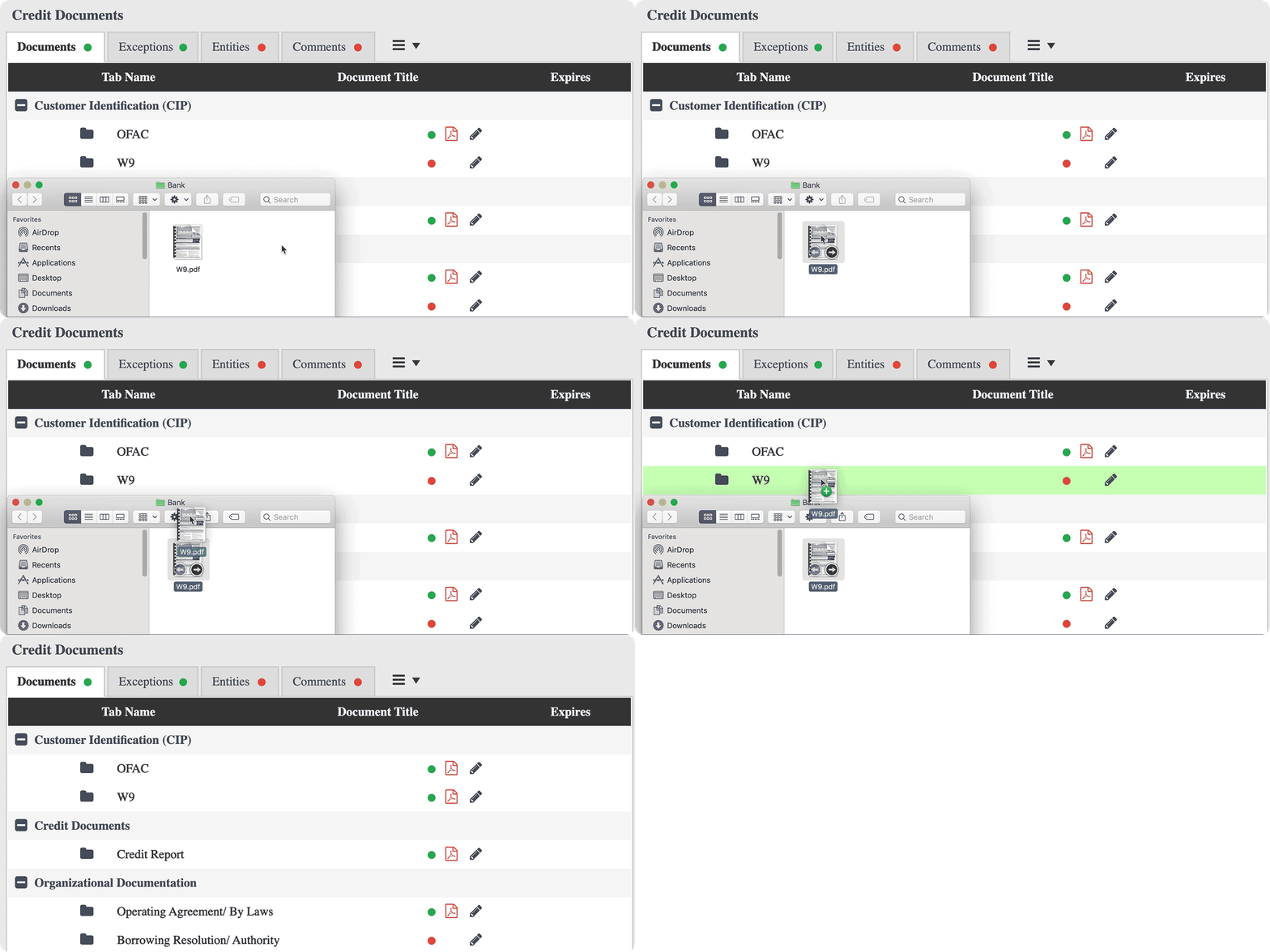
Alogent’s AccuAccount software was designed to support the unique needs of commercial credit and loans. The “customer view” screen in AccuAccount organizes credit and loan information in a familiar way. Red and green indicators make it easy to spot missing documents. Resolving a credit exception is as easy as dragging and dropping into AccuAccount.
Learn about AccuAccount or read more banking definitions.