

Strengthening Your Financial Institution through a “Connected” Approach to Exceptions
Banking exceptions come in a variety of shapes and sizes—and from a variety of departments. Commercial lending is often a major source of exceptions, but mortgages, deposits, and trusts also contribute to the growing list of past due tasks, missing records, and other discrepancies.
Connecting your exception workflows and data in a system like AccuAccount empowers staff, reduces confusion, and contributes to a stronger financial institution.
Connecting People and Processes with Enhanced Exception Management
Exception management is more than just a “back-office” process. At Alogent, we believe it’s an essential workflow that impacts multiple stakeholder groups and processes.
Audits, Exams, & Compliance: When information is managed in paper folders and spreadsheets, preparing for audits and exams can be highly chaotic (and disruptive). Simply determining what’s missing from a loan file requires considerable effort, and then there’s the scramble of contacting account holders to resolve exceptions. Virtual audits are practically impossible in this paradigm, and applying retention rules is a high-touch endeavor. None of this bodes well for auditor or examiner findings reports.
With AccuAccount, banks and credit unions benefit from software that mimics a traditional loan file. Credit information appears on the left side of the screen, and loan information is on the right. Clickable document images lessen reliance on paper and make it easier to see what’s missing. Combining proactive exception management, timely document purge, and core-initiated document placeholders helps financial institutions avoid red flags with auditors and examiners. The point-and-click workflow in AccuAccount turns audit file creation into a scalable process that takes minutes, not hours. Tracking borrowers’ related accounts in AccuAccount provides greater context, which hopefully translates into fewer “follow-up” questions.
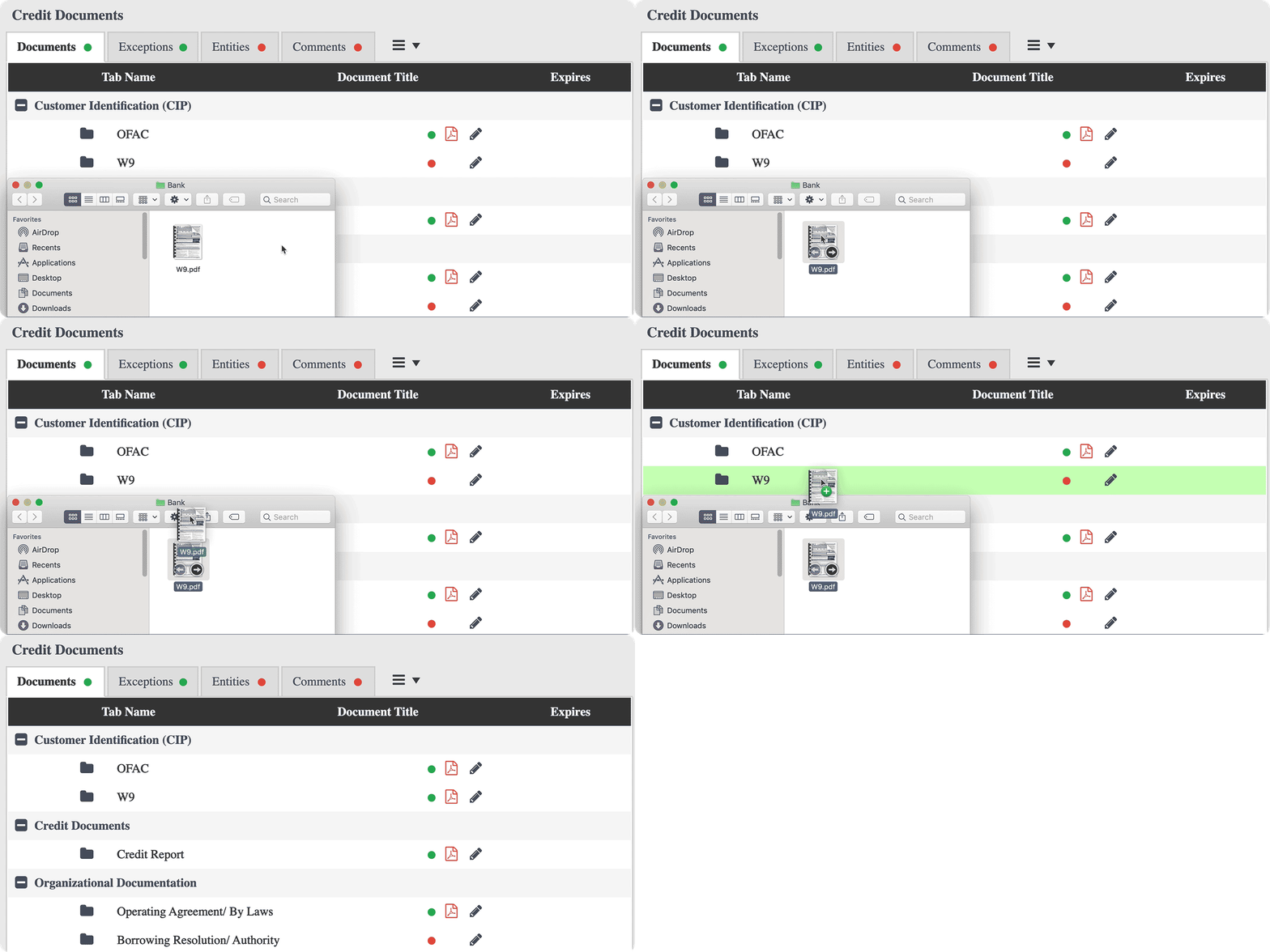
Customer & Member Relationships: Commercial borrowers have personal banking needs, too. However, financial institutions often maintain exception data silos across multiple departments, ticklers, and spreadsheets. For customers and members, that can lead to a fragmented banking experience.
With AccuAccount, financial institutions can track credit, loan, deposit, and trust-related exception information in a single platform. Having one system of record for exception information offers numerous benefits, such as consolidating different “asks” into fewer notice letters and emails. That’s less data entry for staff and, more importantly, a better experience for customers and members.
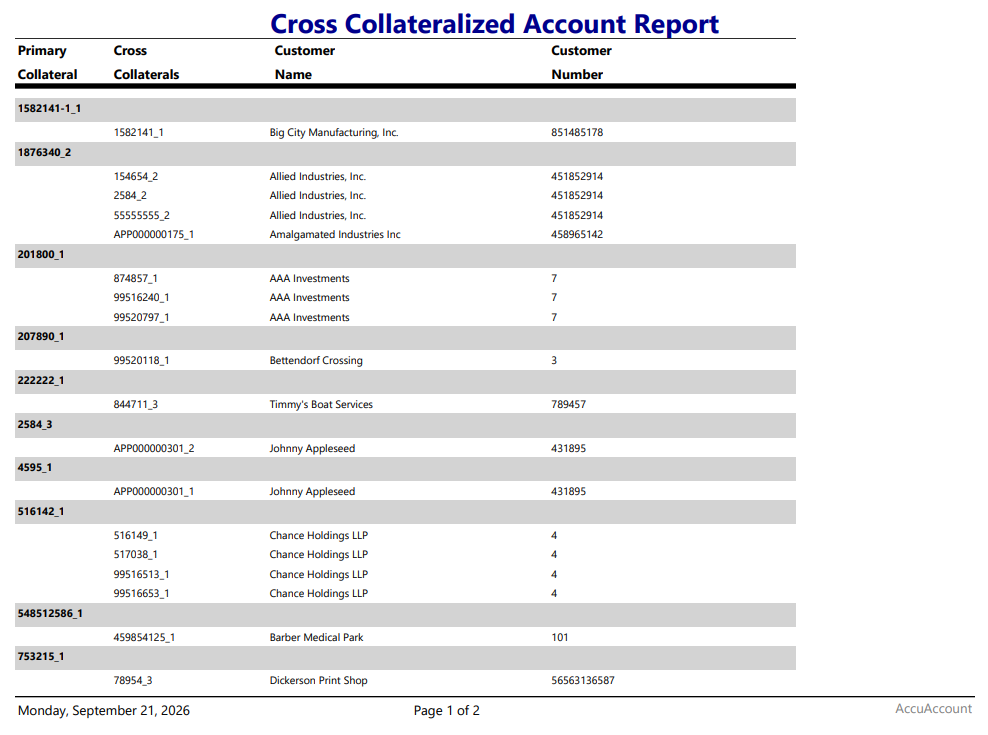
Operational Efficiency: Commercial relationships offer sizable opportunities for financial institutions. But, opportunity usually brings additional complexity. Cross-collateralization—allowing borrowers to pledge the same asset to secure multiple loans—is a prime example. Although highly convenient for the borrower, cross-collateralization is difficult to track from a back-office standpoint. Should the same collateral document reside in several loan files? Should we track missing documents as one exception? Questions like these can be challenging to answer (and unpleasant to track).
With AccuAccount, cross-collateral tracking and other complex workflows become easier. Staff can quickly identify collaterals that are tied to more than one loan. In addition, users can clear cross-collateral exceptions with a single action, rather than hunting through multiple locations.
Interested in connecting your exception workflows and data in AccuAccount? Contact us for a software demo or pricing information.
Be the first to know! Click below to follow us on LinkedIn for news and content updates!