


Ag Lending: The Hidden Risk of Expired and Outdated Documents
Farming plays an essential role in the United States’ economy. In fact, according to a report published by the USDA’s Economic Research Service, American farms contributed over $222 billion to the gross domestic product in 2023.
Behind each farm is a farmer, many of whom rely on financing from local banks and credit unions. Providing farmers with fast, flexible, and personalized service is key for maintaining healthy relationships, but that’s easier said than done—especially when documentation is expired and outdated.
Let’s explore why document exceptions pose risks for financial institutions and why proactive resolution is essential.
Exceptions & Ag Lending
Agricultural lending poses multiple exception-related challenges, not the least of which include:
- Cross-collateralized assets: Securing multiple loans with the same asset, known as cross collateralization, is an approach that allows farmers to enjoy faster access to funds with less paperwork. That said, cross collateralization presents additional tracking requirements to avoid overlending risks.
- Documentation requirements: Credit documents, such as profit and loss statements, may need to be collected from farmers annually (or even more frequently). UCC and EFS continuations must occur within predefined time frames. Farm insurance policies are routinely bound and renewed. Cattle and crop inspection reports are produced and saved. Losing track of essential documentation puts lending institutions at risk, especially when farmers have a bad year.
- Seasonality: Weather is a dominant factor in a farmer’s work schedule. When ground moisture is ideal and the sun is shining in the spring, you can almost guarantee that farmers will be planting. And, when summer begins to fade, farmers look for any opportunity to get their crops out of the field. Providing updated documentation to lenders is probably one of the last things on a farmer’s mind during planting and harvest. Unfortunately for lenders, documents expire throughout the year—even during busy seasons.
Managing Ag Exceptions with AccuAccount
Consolidating your ag exceptions in AccuAccount makes it easier for lenders to quickly prepare for “rainy day” meetings with farmers. With Dynamic Reporting for AccuAccount, ag lenders can build, share, and save custom exception reports. Filtering by the borrower’s name offers a live glimpse into each farmer’s documentation needs.
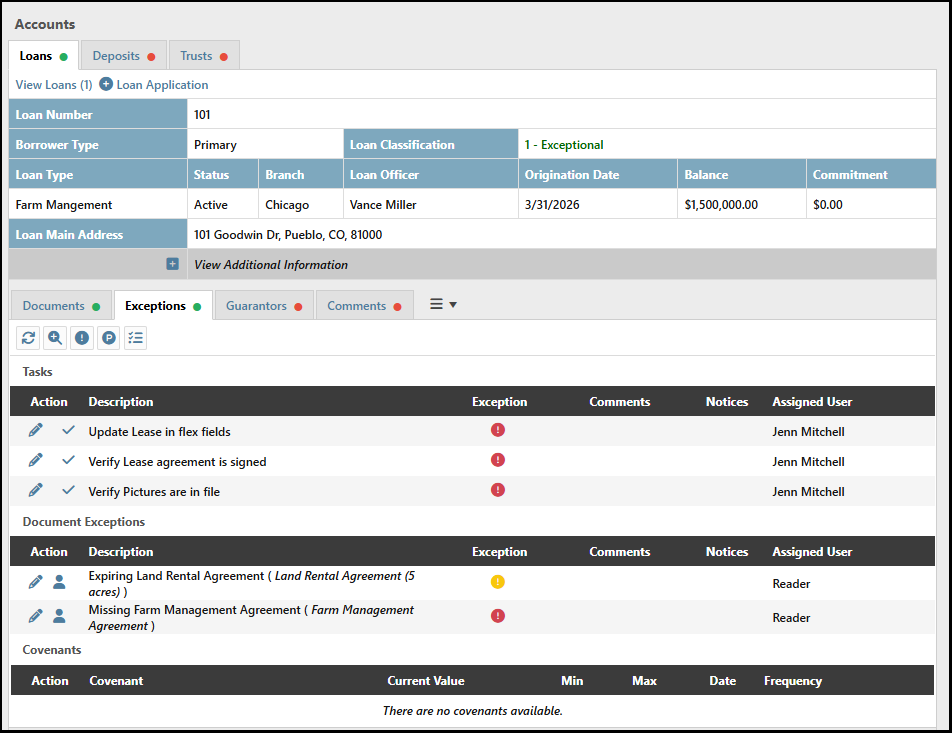
Armed with this information, lenders can develop action plans within minutes. Reaching out to a farmer’s CPA and insurance agent could avoid unnecessary friction with the borrower. UCC and EFS continuations can be delegated to lending assistants, leaving only a handful of requests to discuss with the farmer. As a result, lenders and farmers spend less time talking about documentation—and more time strategizing for that next land auction.
Multiply this approach across your entire ag portfolio, and you’re looking at healthier relationships with less exception-related risk. That’s the best of both worlds.
Contact Alogent to discuss AccuAccount for your ag lending department.
Be the first to know! Click below to follow us on LinkedIn for news and content updates!