


Why Trust Departments Need AccuAccount
AccuAccount is a powerful ECM (enterprise content management) system that’s used by more than 32,000 bankers. At Alogent, we often point out that AccuAccount is optimized for commercial lending—but it’s also incredibly useful for trust departments.
Here’s why trust departments need AccuAccount.
Trusts Involve a Variety of Moving Parts
Serving account holders’ needs is the primary responsibility of a trust department. To do that well, however, financial institutions must carefully balance multiple factors.
Compliance & Risk Mitigation
As with most things in the banking industry, trust accounts have a myriad of compliance-related obligations. The FDIC’s Trust Examination Manual, for example, contains more than 700 pages of content for examiners to consider. The guide mentions “recordkeeping” and “documentation” over 100 times each, underscoring the inherent connection between information, risk mitigation, and compliance.
“Documentation is as important as the administration itself, as fiduciaries must account for their actions to others. Challenges to account administration, resulting in complaints or litigation, may occur years after a particular transaction has occurred. The failure to maintain documentation that adequately supports the actions taken, including the rationale for such actions, may result in court-imposed surcharges or negotiated loss settlements.”—FDIC Trust Examination Manual
Trust Document Management
Departmental operations run smoother when trust officers can quickly locate and access the documents they need. On the other hand, outdated information management techniques make it harder for staff to navigate trust agreements, beneficiary records, asset listings, bills and invoices, and other documents.
Leveraging modern technology like AccuAccount can be a key step for improving trust information management. As the FDIC’s Trust Examination Manual points out, “While some smaller, noncomplex trust departments may continue to maintain trust records manually, most institutions now maintain trust records electronically. Electronic recordkeeping systems are acceptable, provided that the institution has implemented adequate internal controls and procedures to ensure the integrity of trust department records.”
Exception Management
Trust documents are not the entire story when it comes to information management. Carefully tracking and resolving exceptions is also important. Trust-related exceptions occur for a variety of reasons from onboarding throughout the life of the account. It’s therefore no surprise that the FDIC’s Trust Examination Manual highlights the “critical” nature of a tickler on trust account administration.
“A tickler system is a chronologically arranged system of records, which reminds department employees to collect income, distribute funds, calculate trust fees, etc. A tickler system can be maintained in electronic or paper format. Though simple in design and concept, the effective use of tickler systems can be critical for account administration.”
—FDIC Trust Examination Manual
Account Holder Experience
Implementing technology that simplifies information, exception, and compliance management equips staff to deliver enhanced account holder experiences. Rather than waiting for paper files to arrive via courier or navigating through unstructured repositories, trust officers can focus on what matters—serving their account holders.
Trust Officers, Meet AccuAccount
AccuAccount is built specifically for financial institutions and includes built-in features for trust departments. Our software can connect to popular trust cores, automatically pulling in customer, member, and account data. Document placeholders appear in AccuAccount after a trust is booked, virtually eliminating the need for document checklists. Exception report emails are easily enabled to keep stakeholders informed about tasks, missing documents, and other requirements. Resolving exceptions is as easy as dragging and dropping documents.
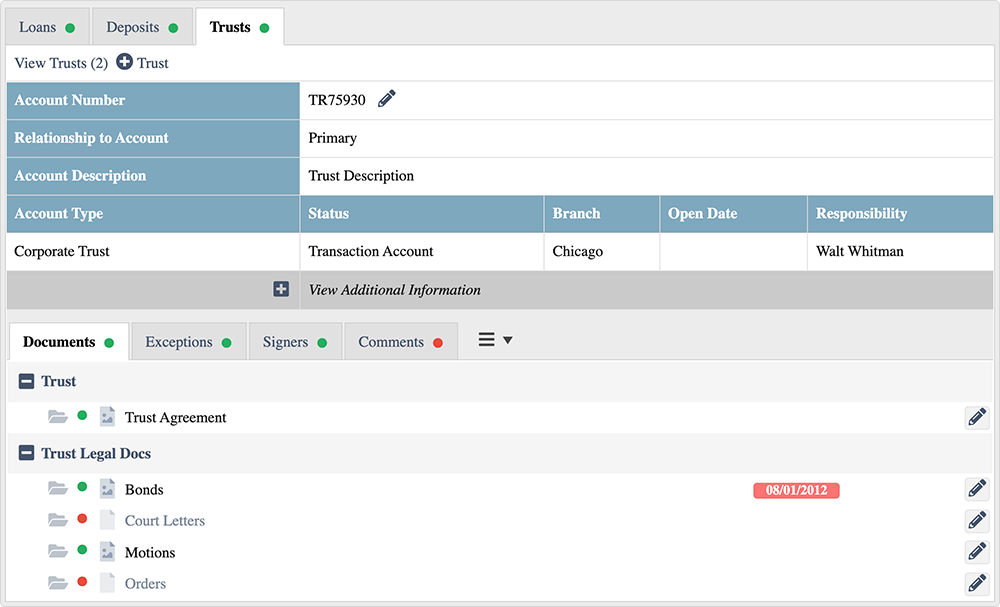
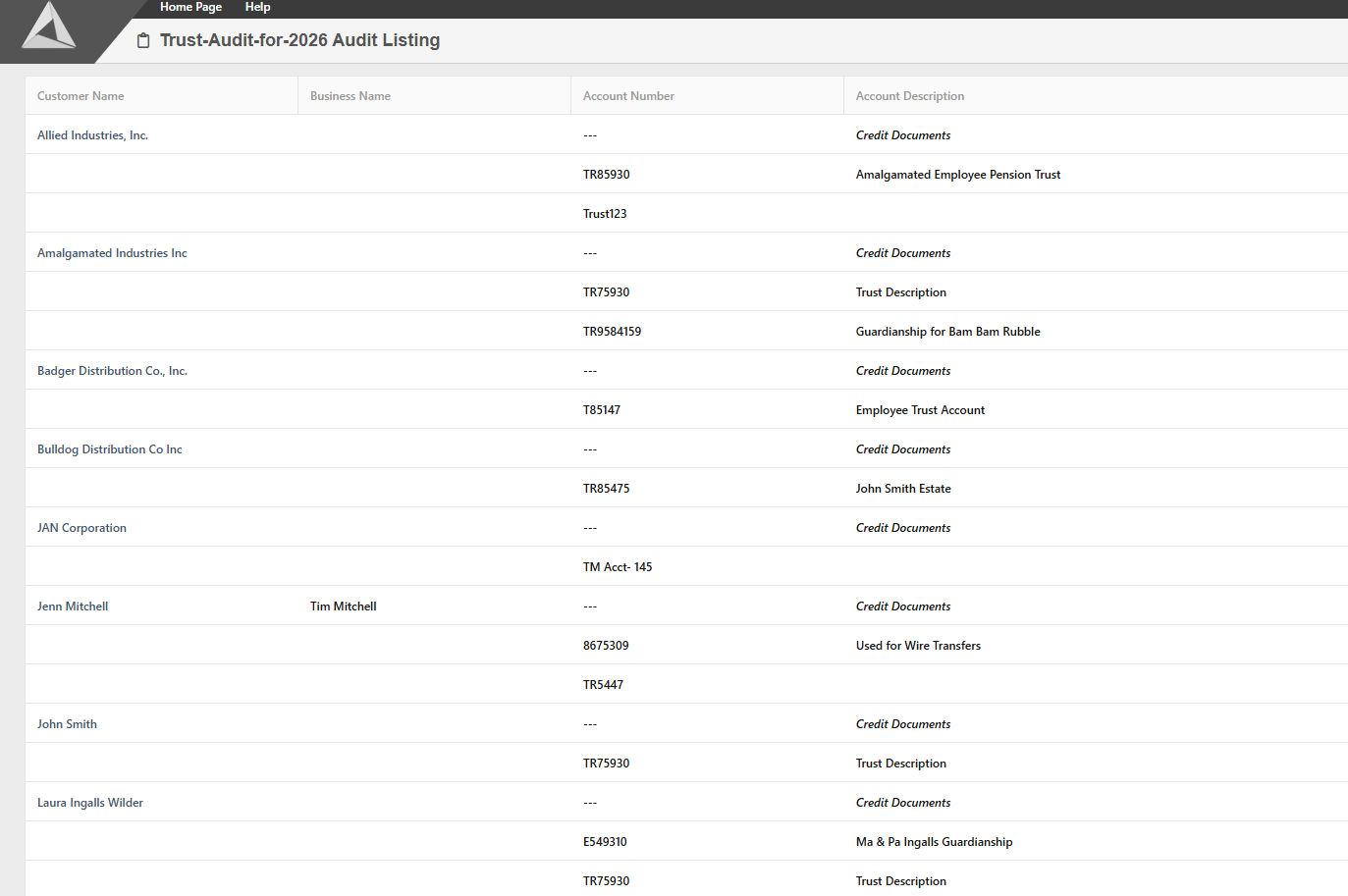
Trust teams can define electronic retention rules based on account type, document type, and other factors. Purging information is a straightforward, repeatable process. Preparing for audits and exams is faster with AccuAccount, too.
Contact us to request an AccuAccount demo
Be the first to know! Click below to follow us on LinkedIn for news and content updates!